
Destination guide
Greece Holidays: Picking the Right Island (and Budgeting the New Fees)
Last updated · 2026-07-06

Nobody needs convincing that Greece is beautiful. What travellers actually need is help choosing between islands that market themselves identically, and a straight answer on the new fees — because Greece now charges a nightly Climate Crisis Resilience Fee that most booking sites leave out of the headline price, and UK travellers now go through the EU's new biometric border checks on arrival.
Quick facts
| Topic | The short version |
|---|---|
| Flight time from UK | 3.5–4.5 hours depending on island |
| Visa | None for stays up to 90 days in 180 |
| EU border rules 2026 | EES biometric registration on arrival (first trip); ETIAS not yet required |
| Tourist tax | Climate Crisis Resilience Fee: €2–€15 per room per night (Apr–Oct), paid at the hotel |
| Currency | Euro |
| Best weather | May to early October |
| Ideal stay | 7 nights single island; 10–14 for two islands |
| All-inclusive | Exists and is excellent in specific pockets — not the default as in Turkey |
The fee most sites don't mention
Greece's Climate Crisis Resilience Fee is charged per room (not per person), per night, and usually collected at the hotel. From April to October 2026: €2/night at 1–2 star, €5 at 3-star, €10 at 4-star, €15 at 5-star. November to March the rates drop to €0.50–€4. A family week at a four-star in August adds €70; two weeks in a five-star adds €210.
Border reality check for 2026
Greece is in Schengen, so UK travellers are now registered under the EU's Entry/Exit System: fingerprints and a photo on your first entry since the system launched. Allow extra time at arrivals on your first 2026 trip.
ETIAS — the €20 online travel authorisation — is not yet required; it's expected to launch late 2026 with a grace period.
The islands, sorted honestly
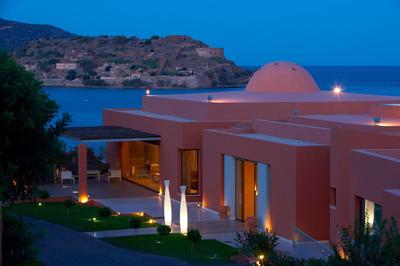
Crete is the safest all-round pick and the best all-inclusive island. Domes of Elounda, Autograph Collection is the flagship in the east for premium families and couples.
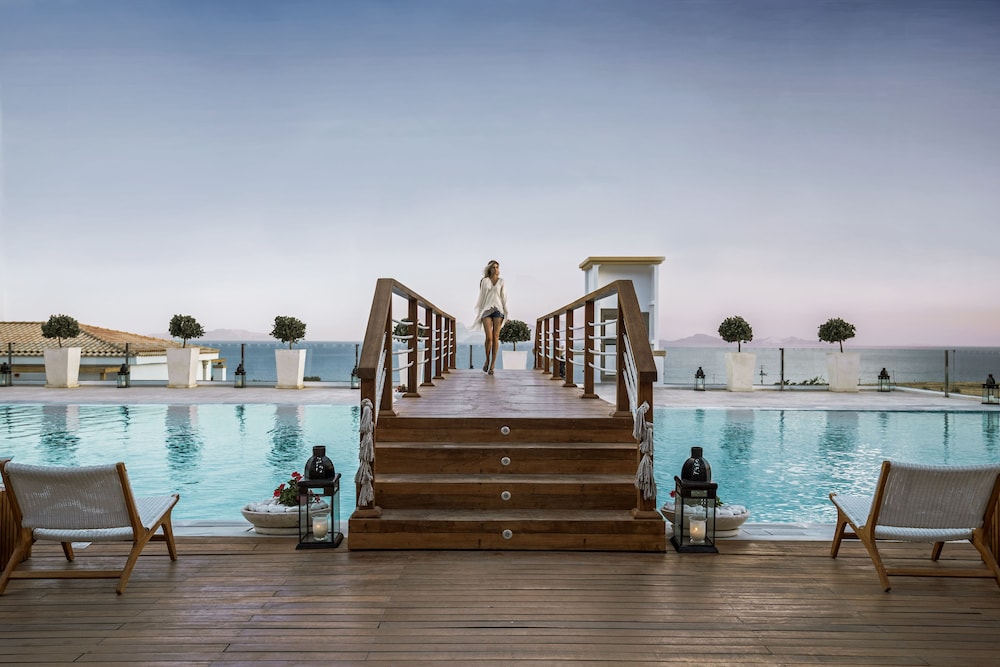
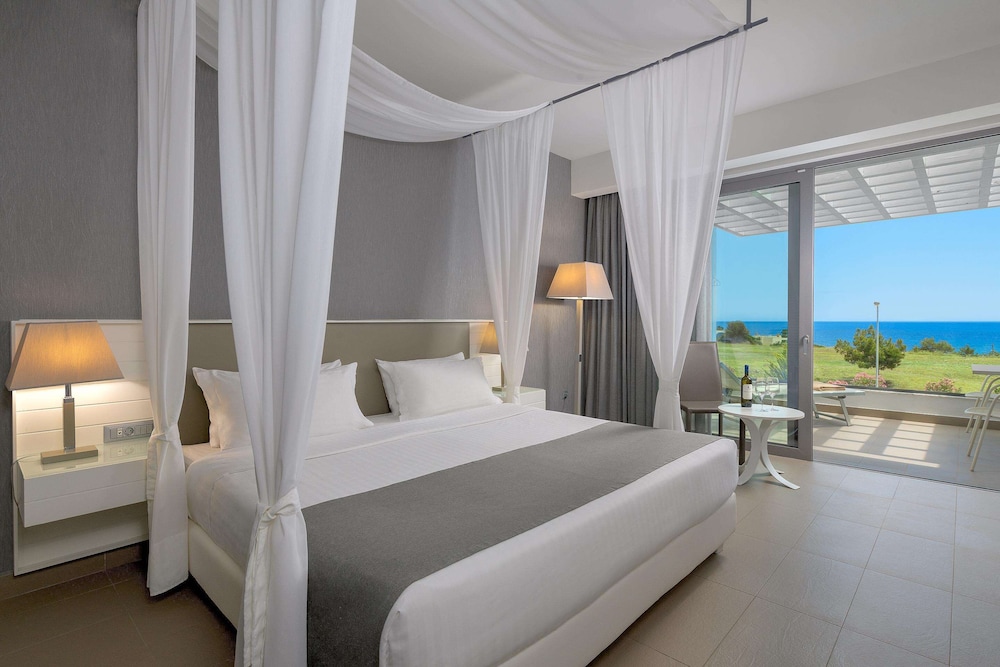
Rhodes is the value-and-reliability island: long sandy east-coast beaches and a magnificent Old Town. Princess Andriana is a strong ultra-all-inclusive pick here — our bookable alternative to Grecotel LUX ME Rhodos, which isn't currently available through our partners.
Kos is flat, family-friendly and cyclable, with a mature all-inclusive strip. Mitsis Selection Blue Domes is the resort-machine benchmark.
Corfu is the green island; Ikos Dassia sits here — the answer when someone asks if there is Maldives-level luxury all-inclusive in Greece.
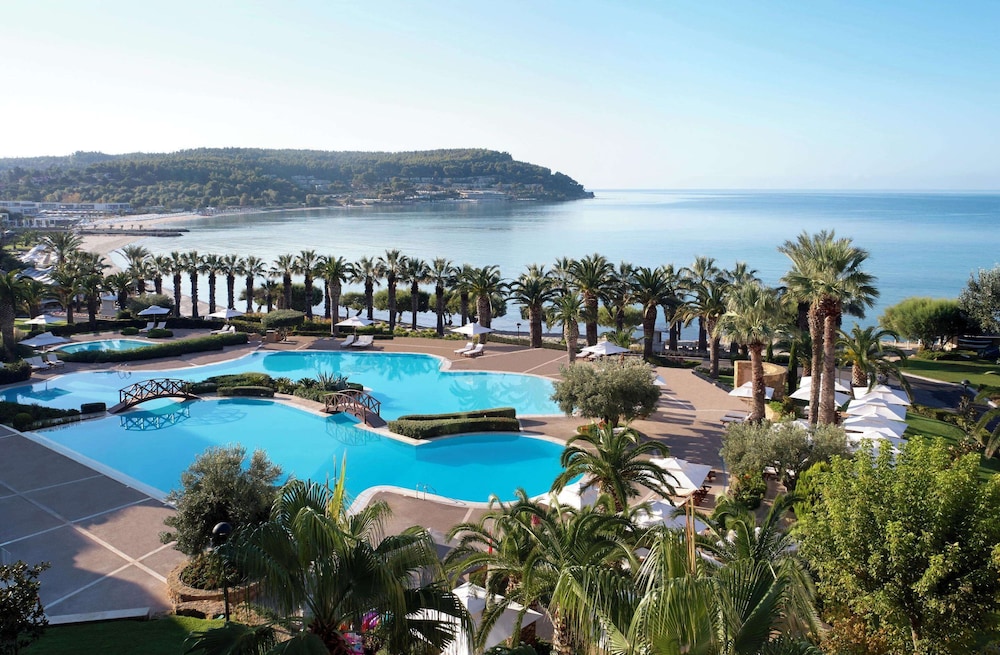
Halkidiki (mainland, via Thessaloniki) is where the Greeks themselves go. Sani Beach is one of Europe's best family resorts.
Santorini is spectacular, but a couples/photography destination, not a beach one — the wrong choice for a family beach fortnight.
Resorts worth shortlisting
Domes of Elounda, Autograph Collection
Crete
East Crete luxury cluster flagship — premium families and couples on Elounda Bay.
Princess Andriana Resort & Spa
Rhodes
Strong ultra-all-inclusive pick on Rhodes — closest Greece gets to the Belek formula on a sandy east coast. Our stand-in for Grecotel LUX ME Rhodos, which isn't currently bookable through our partners.
Mitsis Selection Blue Domes
Kos
Resort-machine benchmark — flat, family-friendly, cyclable Kos strip.
Ikos Dassia
Corfu
Ikos brand answer to Maldives-level luxury all-inclusive — dine-out experiences included.
Sani Beach
Halkidiki
One of Europe's best family resorts — Greeks' own favourite, with fewer flight options than the big islands.
What it costs in 2026
Peak-summer guide per person, 7 nights with flights: £700–£1,000 half board at good four-stars; £1,100–£1,600 at strong all-inclusives; £2,000+ at the Ikos/Sani/Domes level. Eating out remains one of Greece's joys: a proper taverna dinner for two with wine still comes in around €50–€70.
Best time to go
May–June and September–early October are the connoisseur months: 25–30°C, warm sea, prices 25–40% below peak.
July–August is hot, busy and premium-priced. Winter: island tourism largely closes; Athens city breaks work year-round.
Common mistakes
- Forgetting the Climate Resilience Fee, then finding €70–€200 added at checkout.
- Booking Santorini for a beach holiday.
- Assuming all-inclusive is standard — outside specific resorts, Greece's strength is half board plus tavernas.
- Underestimating ferry logistics on multi-island trips.
- First 2026 trip: cutting arrival transfers too fine before EES registration queues.
Who should pick somewhere else
Maximum all-inclusive facilities per pound: Turkey wins. Guaranteed winter warmth: Egypt or the Canaries. But for beauty, food, character and genuinely world-class family resorts at the top end, Greece is the strongest all-rounder on this site.
Hotel guides
Related comparisons
Related guides
Frequently asked questions
- How much is the Greek tourist tax in 2026?
- The Climate Crisis Resilience Fee is €2–€15 per room per night from April to October depending on star rating (€10 at 4-star, €15 at 5-star), dropping to €0.50–€4 from November to March. It's charged per room, not per person, and usually paid at the hotel.
- Do UK travellers need ETIAS for Greece yet?
- No. As of mid-2026, ETIAS has not launched — it's expected late 2026 with a transition period. You do go through the EES biometric border registration.
- Which Greek island is best for families?
- Crete, Kos and Rhodes for choice and value; Halkidiki's Sani Beach and Corfu's Ikos Dassia for the premium tier. Santorini is the one to avoid with young children.
- Is Greece good for all-inclusive?
- In specific pockets, outstanding — Ikos and Sani Beach redefine the category, and Mitsis and Princess Andriana do the classic formula well on Kos and Rhodes. But it's not the island-wide default it is in Turkey.
- When is the sea warmest in Greece?
- Late August through September — the sea holds its summer heat well after the crowds leave, which is exactly why September is the best-value great month.
DealStays may earn a commission when you book through selected travel partners. Prices, availability and inclusions can change, and final booking details are confirmed by the travel provider. Read our affiliate disclosure.